


Varnish and maintenance
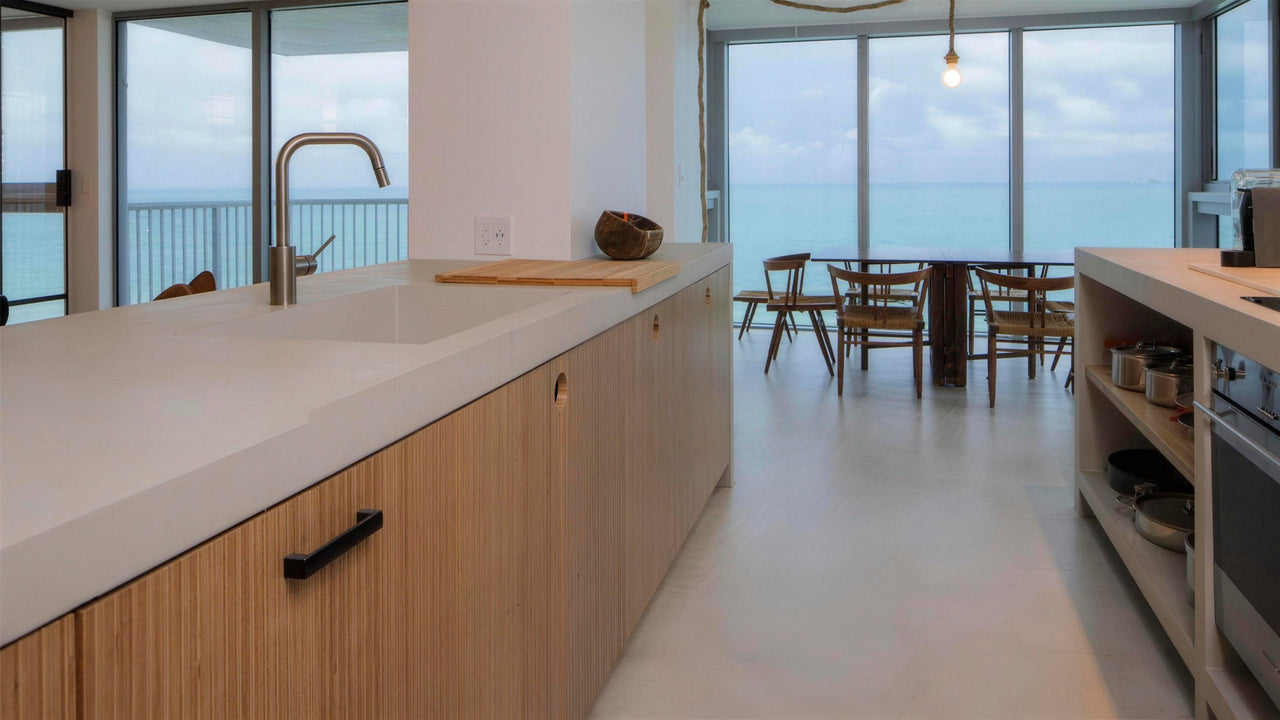
The varnish is the outermost layer. It seals the microcement, takes the wear and makes the surface easy to keep clean.
7 products
First Hydroprimer is applied, which saturates the microcement so the varnish lies evenly. Then comes the varnish, either water-based (Aquamax Pro, Aquapur 70, Aquatix Roller) or solvent-based (Maxipur, Polyshield). Aquamax Pro has separate floor and wall versions, Aquapur 70 is the hardest water-based one, and Aquatix Roller is a simple 1-component varnish without hardener. Maxipur and Polyshield are made for very heavy wear. Once the surface is in use, it is maintained with neutral soap and Floor Protect.
Varnish
-
 HydroprimerPore filler before varnish
Saturates finished microcement before the varnish, so the varnish lies evenly and the colour holds.
Made to order
-
 Aquamax Pro2-component water-based PU varnish
Water-based 2-component PU varnish with separate floor and wall versions, in matt, satin and gloss.
Made to order
-
 Aquapur 702-component water-based PU varnish
The hardest water-based varnish in the range, for floors and walls with heavy wear, in three sheen levels.
Made to order
-
 Aquatix Roller1-component water-based PU varnish
Simple 1-component varnish without hardener, for walls and porous surfaces, in satin.
Made to order
-
 Maxipur2-component solvent-based PU varnish
Solvent-based 2-component PU varnish for very heavy wear, in three versions from thick to thin.
Made to order
-
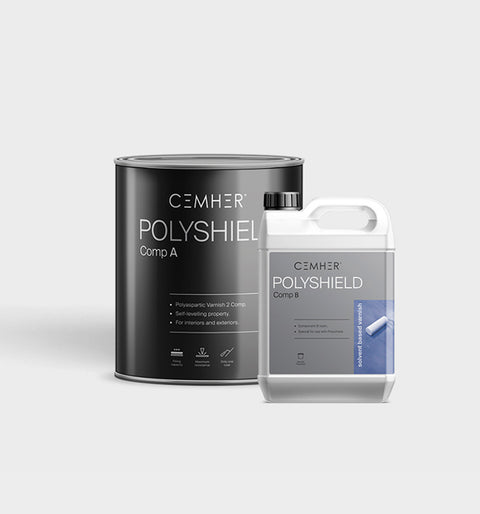 PolyshieldPolyaspartic gloss varnish, 2-component
One thick, glossy coat that withstands very heavy wear. Can be matted down with Aquamax Pro.
Made to order


Maintenance

Which varnish when
| Situation | Choose | Why |
|---|---|---|
| Before any varnish on finished microcement | Hydroprimer | It saturates the surface so the varnish does not soak in unevenly, and the colour holds under the varnish. |
| Water-based 2-component varnish on floors or walls | Aquamax Pro (floor version on floors, wall version on walls) | The floor version has twice as much hardener, and more hardener gives a harder surface and better resistance to chemicals. |
| Water-based varnish where the surface gets heavy wear, also on floors with underfloor heating | Aquapur 70 | It has the most solids and the highest hardness of the water-based varnishes, and Cemher specifies it for floors with underfloor heating. |
| Simple 1-component varnish on walls and porous surfaces | Aquatix Roller | No hardener is mixed in, and it gives a satin surface in two thin coats. |
| Solvent-based varnish for very heavy wear | Maxipur | Solvent-based 2-component PU with a long pot life, where you choose the version by how thick the varnish film should be. |
| Thick, filling varnish film with solvent-based varnish | Maxipur 25 % | The least hardener gives the thickest varnish, and Cemher states that it gives a thicker film and fills more than 50 %. |
| Thin solvent-based varnish that is to penetrate well | Maxipur 50 % or Maxipur 100 % | More hardener gives a thinner varnish that penetrates the surface better. |
| One thick, glossy coat | Polyshield | It flows out and gives a thick, high-gloss film in one coat. |
| Matt surface | Aquamax Pro, Aquapur 70 or Maxipur | All three are supplied in matt, and matt Aquamax Pro is made without matting agent. |
| Satin surface | Aquamax Pro, Aquapur 70, Maxipur or Aquatix Roller | All four are available in satin, and Aquatix Roller is only available in satin. |
| Gloss surface | Aquamax Pro, Aquapur 70, Maxipur or Polyshield | Polyshield is only available in gloss and gives the thickest gloss film; the others are also available in gloss. |
Good to know
- In wet rooms, the microcement is applied on top of an approved waterproofing membrane. It is the membrane that is the waterproof layer, not the varnish.
- Cemher states that Microne and Microröck are watertight in the material, and that the varnish there protects the surface. That does not change the requirement for a waterproofing membrane in wet rooms.
- The build-up in wet rooms must follow the Norwegian wet-room standard (våtromsnormen), and we recommend a professional for the membrane work.
- The varnish only reaches full strength after a few weeks. During the first week, the surface must not be washed or get wet.
- Maxipur and Polyshield are solvent-based and for professional use, with good ventilation and a mask with a filter for organic solvents.